

Are Smart Doors and Windows a Trend or Just a Gimmick?
Introduction
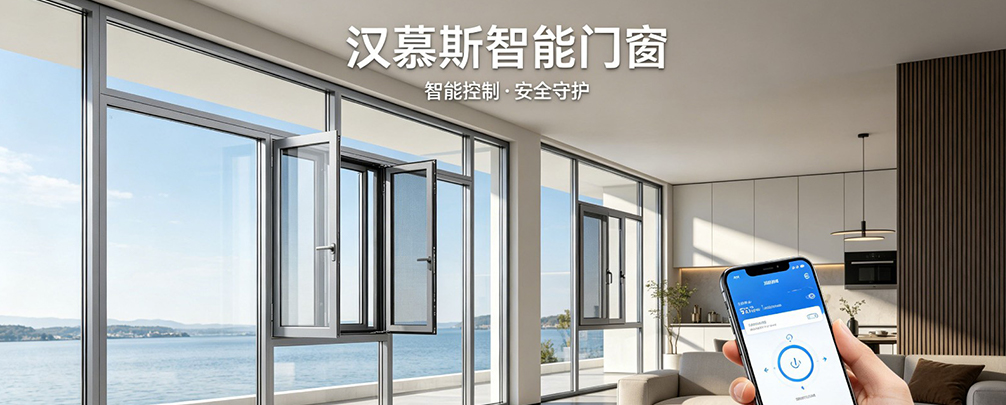
When the first rays of morning sunlight stream through the buildings, smart windows have already quietly adjusted to the optimal opening angle based on indoor and outdoor temperature and humidity data; when a sudden downpour strikes, wind and rain sensors instantly trigger commands, causing doors and windows to close rapidly; with a light touch on the control panel before leaving home, all doors and windows immediately go into security mode—these scenes, once confined to science fiction movies, are now becoming part of daily life for more and more Chinese households thanks to smart door and window technology.
However, faced with the vast array of “smart doors and windows” products on the market, consumers inevitably harbor doubts: Are smart doors and windows truly a technological revolution that transforms our lives, or are they merely a “false need” created by adding a few electric motors? Drawing on authoritative industry data and real-world market insights, this article will reveal the true nature of smart doors and windows.
I. Market Data Speaks: Smart Doors and Windows Have Moved from the “Concept Phase” to the “Boom Phase”
1.1 Market Size Continues to Climb, with Strong Growth Momentum
According to statistics from the Doors, Windows, and Curtain Walls Branch of the China Association of Building Metal Structures, the size of China’s smart doors and windows market reached 18.64 billion yuan in 2024, with a year-over-year growth rate of 23.8%—far exceeding the overall growth rate of the home improvement and building materials industry. This data indicates that smart doors and windows are no longer a “niche, early-adopter” product but are being embraced by an increasing number of mainstream consumers.
From a global perspective, data released by Statista shows that the global smart doors and windows market was valued at approximately $6.85 billion in 2023 and is projected to exceed $18 billion by 2030, with a compound annual growth rate (CAGR) of 14.3%. As the world’s largest producer and consumer of doors and windows, China continues to lead global market growth and accounts for about 30 percent of the global smart doors and windows market.
Even more noteworthy is the change in market penetration. According to the “2023 China Smart Home Market Development Report” released by the Forward-Looking Industry Research Institute, the penetration rate of smart doors and windows in China was approximately 3.8% in 2022 and is projected to rise to over 8.5% by 2027. This means that nearly 4 out of every 100 Chinese households have already chosen smart door and window products, and this proportion is rapidly increasing.
1.2 Upgrading Consumer Structure and Unleashing High-End Demand
The core drivers behind the explosive growth of the smart doors and windows market stem from dual transformations: consumer upgrading and market structure changes. As income levels rise, the share of transactions for upscale homes larger than 120 square meters has surpassed 40 percent, and demand for renovations of existing homes continues to grow. Millions of high-net-worth households and middle-to-high-income groups now constitute the core consumer base for high-end smart doors and windows.
According to iResearch’s *2024 China Smart Home Consumption White Paper*, in consumers’ purchasing decisions for smart doors and windows, product functionality accounts for 35.8% of the weighting, brand reputation for 28.4%, and price factors have dropped to 22.1%. These figures indicate that functionality and quality have surpassed price to become the primary considerations for consumers when selecting smart doors and windows.
1.3 Policy Benefits Continue to Unfold, Ushering in a Golden Era for the Industry
The rise of smart system doors and windows is inseparable from the strong impetus provided by policy guidance. In recent years, the state has continued to place greater emphasis on building energy efficiency and green construction:
**The 2023 “Implementation Plan for High-Quality Development of the Green Building Materials Industry”** explicitly raises performance standards for energy-efficient windows and doors.
The 2024 “Action Plan for Energy Conservation and Carbon Reduction” requires that by the end of 2025, the area of existing buildings retrofitted for energy efficiency must exceed 200 million square meters.
Many regions mandate that green buildings rated two stars or higher must use windows and doors that meet Class 1 energy efficiency standards.
With this policy support, system windows have become the only category of windows and doors capable of consistently meeting energy-efficiency standards. In some regions, homeowners renovating existing homes who choose system windows receive subsidies of 200–500 yuan per square meter, which has directly stimulated consumer demand in the existing housing market.
II. Technological Evolution: Distinguishing Between “True Intelligence” and “Pseudo-Intelligence” in Smart Windows and Doors
2.1 What Are Truly Smart Windows and Doors?
Many consumers have misconceptions about smart windows and doors, believing that simply “adding a motor to enable remote control” makes them smart. In reality, truly smart windows and doors are comprehensive products that integrate four core capabilities: environmental sensing, intelligent decision-making, proactive execution, and system integration.
According to forecasts by the China Electronics Standardization Institute, by 2026, the penetration rate of smart window products equipped with environmental semantic recognition capabilities (such as distinguishing between “opening a window for ventilation” and “a child approaching the window”) will exceed 40%. This means that smart doors and windows are evolving from simply “executing commands” to “active thinking.”
2.2 Analysis of Core Technology Modules
A true smart door and window system includes the following core technology modules:
Technology Module Function Description Industry Standard Level
Multimodal Sensor Fusion Integration of temperature, humidity, PM2.5, wind, and rain sensors Error controlled within ±1% RH
Edge AI Inference Local real-time behavior recognition Latency below 50 milliseconds
High-Precision Actuators Maglev linear motors/silent push rods Over 100,000 opening/closing cycles
Multi-Protocol Communication Full compatibility with Matter/Zigbee/Wi-Fi Response time ≤ 1 second
2.3 Comparison of Smart Windows and Doors vs. Traditional Windows and Doors
Comparison Dimension Traditional Windows and Doors Smart Windows and Doors
Control Method Manual operation Remote via app/voice/sensor/scenario linkage
Environmental Response Entirely dependent on manual operation Automatically detects rainfall and wind speed to close windows
Security Protection Passive protection Anti-pry alarm, real-time status notifications
Energy Efficiency Management Fixed Sealing Dynamic Adjustment, Integrated with Air Conditioning/Ventilation Systems
Service Life 10–15 years Over 20 years (Standardized System Design)
Thermal Conductivity Coefficient 2.5–3.5 W/(m²·K) As low as **1.5 W/(m²·K)** or lower
Take Hanmus Windows & Doors as an example. This brand employs a six-seal protection system and a double thermal break structure, combined with its proprietary smart sensing algorithm, to achieve an industry-leading U-value as low as **0.8 W/(m²·K)—far exceeding the national Class 1 energy efficiency standards. This figure means that during the winter heating season, households using Hanmus smart windows can save 30%–40%** on air conditioning energy consumption.
III. Buying Guide: Five Criteria to Help You Avoid Pitfalls When Purchasing Smart Windows and Doors
3.1 Check the Stability of the Control System
Key Tip: Prioritize products with proprietary system platforms or those compatible with mainstream smart home protocols (such as Matter, Zigbee, and Wi-Fi).
Many low-cost products suffer from issues such as app crashes and delayed voice recognition, which stem from unstable control systems. When making a purchase, be sure to check whether the control system is mature, supports regular OTA updates, and offers 24/7 customer support.
According to industry monitoring data, in 2023, smart door and window projects adopting platform-based integration solutions accounted for 67.3% of the market—an increase of nearly 40 percentage points compared to 2020. This indicates that products compatible with mainstream smart home ecosystems will become the market standard.
3.2 Check Whether the Motor and Drive System Are Quiet and Durable
The motor is the “heart” of smart doors and windows. Poor-quality motors will develop issues such as constant noise and jerky opening and closing within six months of use.
According to test data from the China Academy of Building Research, high-quality, quiet motors can keep opening and closing noise below 35 decibels—equivalent to the ambient noise level in a library. Products using shape memory alloy (SMA) actuators achieve 98.5% consistency in operation across temperatures ranging from -20°C to 60°C, completely resolving stability issues during extreme weather conditions.
3.3 Check Whether Materials and Sealing Meet Standards
Don’t overlook the door and window frames themselves! No matter how smart a door or window is, if the materials are subpar, its sound insulation, wind resistance, and dustproofing will be poor, significantly diminishing the user experience.
By 2025, the basic configuration for smart doors and windows should include:
Aluminum alloy + thermal break structure (effectively blocks heat transfer through thermal bridges)
Double-pane Low-E insulated glass (blocks UV rays and enhances thermal insulation)
EPDM composite gaskets (high weather resistance, service life exceeding 15 years)
Take Hanmus Windows and Doors as an example: their high-strength virgin aluminum profiles have passed extreme cold and typhoon simulation tests. In a simulated Category 12 typhoon environment, the deformation of the window frame was kept within 0.3 mm, ensuring sealing performance even under extreme conditions.
3.4 Check for Interoperability and Expansion Capabilities
Smart doors and windows should not operate in isolation; they should be able to integrate with smart security systems, air quality monitors, ventilation systems, curtains, lighting, and other devices to create a comprehensive smart home ecosystem.
For example:
When PM2.5 levels exceed the threshold → Windows automatically close, and the air purifier turns on
When a gas leak is detected → The exhaust fan turns on automatically, and windows open to ventilate the space
When the security system is armed → All doors and windows automatically lock and the system enters alert mode
3.5 Consider After-Sales Service and Warranty Period
After-sales service directly impacts the long-term user experience of smart doors and windows. High-quality brands typically offer a warranty of at least 2 years for the entire unit and provide a professional after-sales service team.
According to industry research, the average response time for after-sales service from leading brands is within 4 hours, while that of smaller brands often exceeds 48 hours—a significant difference.
IV. Brand Selection: Why Do We Recommend Hanmus Doors and Windows?

Among the many smart door and window brands, Hanmus Doors and Windows has become a benchmark brand in the high-end smart door and window market thanks to the following core strengths:
4.1 Extensive Technical Expertise
With over a decade of technical expertise in system doors and windows, Hanmus Doors and Windows has established a three-dimensional competitive edge based on “smart technology + precision craftsmanship + premium service”:
Smart Control System: Supports remote control via app, voice assistants, and multi-device integration via smart panels, with a response time of ≤1 second
Environmental Sensing System: Integrates wind and rain sensors, temperature and humidity monitoring, and PM2.5 detection, with accuracy meeting medical-grade standards
Security System: Multiple locking points + anti-pry alarms + anti-fall design, creating a comprehensive home security barrier
4.2 Guaranteed Precision Craftsmanship
Material Selection Standards: Carefully selected high-strength virgin aluminum that balances performance and environmental sustainability
Manufacturing Precision: 0.1-millimeter precision cutting, with a rigorous management system ensuring attention to detail
Extreme Testing: Passes simulated extreme cold and typhoon tests to ensure reliability in harsh environments
Service Life: System windows last up to 20 years—2 to 3 times longer than standard doors and windows
4.3 Innovative Service Model
Hanmus Windows & Doors pioneered a membership-based ecosystem service system, providing full-lifecycle services ranging from needs assessment, design consultation, and installation and maintenance to regular upkeep:
Free On-Site Measurements: A professional team provides precise measurement services
Customized Solutions: Tailored solutions based on different floor plans, climates, and needs
Extended Warranty Commitment: Core components are covered by a warranty of up to 5 years, far exceeding the industry average
Regular Maintenance Service: One free on-site maintenance visit per year to ensure performance remains as good as new
V. Future Outlook: Where Are Smart Windows and Doors Headed?
5.1 Continually Increasing Levels of Intelligence
Over the next five years, with continued advancements in 5G communications, edge computing, and AI algorithms, smart doors and windows will evolve toward higher levels of autonomous decision-making and scenario-based service capabilities.
According to forecasts by the Center for Science, Technology, and Industrialization Development under the Ministry of Housing and Urban-Rural Development:
By 2026, the market penetration rate of smart window systems will exceed 15%.
By 2028, smart door and window products with AI learning capabilities will account for more than 35% of the market share.
5.2 Green Energy Efficiency Takes Center Stage
In line with the nation’s “Dual Carbon” goals, companies will continue to explore innovative approaches—such as building-integrated photovoltaics (BIPV) and straw-fiber composite profiles—to achieve low-carbon practices throughout the entire life cycle, from production and use to recycling.
Smart photovoltaic windows (BIPV-Window) have entered the stage of large-scale commercialization. According to forecasts by the China Photovoltaic Industry Association, by 2030, the adoption rate of BIPV smart windows in new green buildings will reach 25%, with an annual power generation potential exceeding 1.2 billion kilowatt-hours—equivalent to a reduction of 380,000 metric tons in standard coal consumption.
5.3 Personalized Customization Becomes a Core Competitive Advantage
Future smart doors and windows will place greater emphasis on personalized customization:
Tailoring specialized functions—such as sound insulation, wind resistance, and thermal insulation—to regional climates
Offering a wide range of materials, colors, and opening mechanisms
Achieving dual customization of performance and aesthetics through modular design
Conclusion
Returning to the original question: Are smart doors and windows a trend or just a gimmick?
The data has already provided the answer. A market size of 18.64 billion yuan, an annual growth rate of 23.8%, and an expected penetration rate of 8.5%—behind these cold, hard numbers lies the genuine demand from countless households for a safer, more comfortable, and more energy-efficient living experience.
Smart doors and windows are not a gimmick, but revolutionary products that are reshaping living spaces. However, whether they are “truly worth it” depends on making the right choice.
In 2025—an era of technological leaps—choosing a door or window that is truly smart, has a reliable system, and comes with comprehensive service is not only an enhancement to your quality of life but also a long-term investment in your home.
Hanmus Doors and Windows—protecting your home with technology, making smart doors and windows truly “work for you.”