

After I replaced the windows, my neighbors thought I had moved into a “soundproof pod.”
At 2 a.m., the argument between a couple upstairs pierced through the ceiling; the hustle and bustle from the barbecue stall below reached my ears; and the rumbling of trucks on the road resonated like a drumbeat, striking my nerves.
This is my 427th night without sleep spent in my rented apartment.
My name is Aze, and I work as a programmer in Shenzhen. Three years ago, to make my daily commute more convenient, I rented a small two-bedroom apartment in an old residential complex in the Futian District. The apartment was part of an older housing complex built in the 1990s; its windows were sliding PVC windows, and the sealing strips had long since worn out and deformed. In the summer, when I turned on the air conditioning, the cold air would escape outside; in the winter, the radiators were scorching hot, yet the area by the window felt as cold as an ice cellar. The most troublesome issue was the poor sound insulation—I could clearly hear what drama the next door neighbor was watching, hear the crying of the children downstairs, and even catch every single word of the argument between a couple in the building across the street.
It wasn't until the landlord suggested replacing my windows that things changed.
"Which window would be best to replace?" I asked.
"My daughter works in home interior design; she says the thermal break aluminum system windows are currently very popular—they offer excellent soundproofing, thermal insulation, and water resistance," the landlord said, pausing briefly. "I can't quite remember the brand—something like Han..."
"Hanmus?"
"Right, right, right – this is it!"
And thus, the story of Hanmus Doors and Windows began.
1. Life after replacing the window felt like pressing the mute button.
The day we installed the new window fell exactly on a weekend.
The installation team from Hanmus Windows and Doors was highly professional—they arrived precisely at 9 a.m. to dismantle the old windows, clean the opening, and perform the installation—all in one seamless operation. I even took time off work to supervise the process from home—after all, the total cost, including installation fees, for a set of windows is quite substantial.
After the installation was complete, the technician asked me to inspect the work. I walked over to the window and casually closed it.
The world suddenly fell silent.
The hustle and bustle of the barbecue stall downstairs seemed as if someone had pressed the pause button; the square dance music coming from the building across the street had turned into a distant hum; even one's own voice felt clearer—no longer interrupted by that noisy echo.
The technician pointed to a small plaque at the window corner and said, "This unit belongs to the Hanmus Silent Diamond Series; it features triple-glass, double-chamber insulating glass with argon gas filling in the center, paired with an EPDM (Ethylene Propylene Diene Monomer) composite sealing strip, achieving an airtightness rating of Class 8."
I don't really understand all these technical terms, but one piece of data stood out to me—
Noise reduction: 37 dB.
The technician opened his smartphone to show me a test report: "This is a report issued by the National Construction Engineering Quality Supervision and Inspection Center. All Hanmus products have undergone dual CMA/CNAS certification testing; clear data are available regarding their sound insulation performance, air tightness, water tightness, and wind pressure resistance."
I tried opening and closing the window, savoring the smooth sensation. "This opening and closing feels quite smooth."
"The hinges are from US-based Himek – capable of supporting loads of over 50 kg – and can withstand up to 100,000 cycles of opening and closing without any issue," the technician said, then pointed to the handle. "This is a patented handle developed in-house by Hanmus; its ergonomic design ensures that operating the device doesn't strain your hands."
That evening, for the first time, I slept in that rented apartment until I woke up naturally.
No noise, no insomnia – no need to show up at work the next day with dark circles under your eyes.
A good window is truly a way of life.
II. The Five Key Selection Criteria for System Windows – Avoid the pitfalls I've encountered!
After I replaced the window in Hanmu Houshu, many friends around me came to ask me, "Your window looks really nice – which brand is it? How did you choose it?"
I've noticed that most people face a significant "information gap" when purchasing doors and windows—either they're misled by the vendors' persuasive rhetoric, or they focus solely on the price while ignoring quality, ultimately spending a large sum of money only to end up with nothing.
Drawing upon my own purchasing experience and my research into the doors and windows industry over the past two years, I have identified five key criteria for selecting system windows – for your reference.
Indicator 1: Profiles – Being thicker is not necessarily better; however, the profile must be sufficiently rigid.
Many people believe that the thicker the aluminum window and door profiles are, the better – but this is actually a misconception.
According to the new national standard for aluminum alloy doors and windows (GB/T 8478-2020), the wall thickness of main profiles for external windows shall not be less than 1.8 mm, and that for door profiles shall not be less than 2.0 mm. Operating below these specifications will compromise both the structural strength and wind pressure resistance performance.
However, a thicker profile is not necessarily better; if the profile wall thickness exceeds 2.5 mm, unless there are specific requirements, it may actually increase the weight of the window frame and shorten the service life of the hardware.
More importantly, pay attention to the material. Hanmus Doors and Windows uses 6063-T5 aerospace-grade primary aluminum; compared to recycled aluminum, primary aluminum offers better surface finish, higher strength, and superior oxidation resistance.
Inspection method: Weigh the window frame manually and check whether the profile surface is smooth and whether the color is uniform.
Indicator 2: Thermal Insulation Strip – The "heart" of thermal break aluminum profiles.
The term "thermal break aluminum" refers to the use of thermal insulation strips.
The quality of the thermal insulation strip directly determines the thermal insulation and heat retention performance of doors and windows. Two common materials for thermal insulation strips on the market are PA66 nylon and PVC plastic.
The PA66 nylon thermal insulation strip (marked as PA66GF25, indicating a 25% glass fiber content) offers the following advantages:
• High-temperature resistance: Can be used over an extended period in environments ranging from **-30°C to 80°C** without deformation.
• High strength: tensile strength is more than three times higher than that of PVC.
• Long service life: Under normal operating conditions, the service life can exceed 20 years.
PVC insulation strips have significant drawbacks:
• Poor thermal stability: prone to deformation at high temperatures and brittle fracture at low temperatures
• Low durability: Prolonged use may lead to loosening or detachment
• Short lifespan: Typically fails due to aging after 3–5 years
All Hanmus window and door products come standardly equipped with PA66GF25 thermal insulation strips, featuring a low thermal conductivity coefficient of just 0.3 W/(m·K), effectively mitigating the "thermal bridge" effect in aluminum profiles.
Identification method: Check the markings on the surface of the thermal insulation strip; genuine PA66 thermal insulation strips will have clear brand and material identification; alternatively, you can test the strip with a lighter – PA66 will self-extinguish once removed from the flame, whereas PVC will melt and ignite.
Indicator 3: Glass – The "soul" accounting for over 70% of the window area
Glass constitutes the largest component of doors and windows and is crucial for determining their sound insulation, thermal insulation, and safety performance.
Basic Configuration:
• Must use 3C-certified tempered glass (the marking must be applied via high-temperature heat transfer and cannot be removed).
• Double-glazed glass is standard; common specifications include 5 mm + 18 mm A + 5 mm (where A represents the thickness of the insulating layer).
Advanced Configuration:
• For locations facing streets, near elevated roads, or near high-speed railway stations: choose triple-glazed or double-glazed laminated glass for superior sound insulation.
• West-facing rooms: Use Low-E low-emissivity glass, which can block over 80% of infrared thermal energy.
• High-rise residents: Recommended glass thickness is ≥6 mm; large glass panels should be thickened.
Hamus doors and windows come standard with automotive-grade tempered insulating glass; these can be upgraded to triple-glazed, double-cavity units or Low-E glass depending on requirements. The glass panels are sourced from leading brands such as China Glass and Xinyi, ensuring guaranteed quality.
Inspection method: Check the 3C certification mark on the glass corner; tap the glass to listen to the sound – a clear, loud sound indicates high-quality tempered glass.
Indicator 4: Hardware – The "joints" of doors and windows that determine their service life
Hardware accessories are the most frequently overlooked yet critically important component of doors and windows.
A high-quality hardware system can ensure that doors and windows operate smoothly even after more than 100,000 open-and-close cycles; in contrast, low-quality hardware may experience issues such as jamming, sagging, or sealing failure within just 2–3 years.
Core hardware components:
• Handle: The lever used to open or close windows; it is advisable to choose branded products (e.g., HOPPE, SIEGENIA).
• hinge/sliding support: the component that supports the window sash; load-bearing capacity ≥ 50 kg
• Locking mechanism and base: Determines sealing and anti-theft performance; it is recommended to use a multi-point locking system.
Hamus Doors and Windows feature a comprehensive range of branded hardware components; all handles, hinges, and operating mechanisms are manufactured by the leading global brand Ximeke. The hinges can support a load of over 50 kg and have passed a opening/closing cycle test exceeding 100,000 cycles – significantly surpassing national standard requirements.
Testing method: Operate the window sashes or doors on-site more than 10 times to check whether they move smoothly, whether there are any abnormal noises, and whether the locking mechanism is secure.
Indicator 5: Sealing System – Details Make the Difference
Many people are unaware that **90%** of window and door leakage or air infiltration issues stem from the sealing system.
Sealing system composition:
• EPDM rubber strip: Used for sealing between window frames and window sashes
• Butyl rubber + polysulfide rubber: Used for sealing hollow glass units
• Weather-resistant sealant: For sealing between window frames and walls
Method to check sealing performance: After closing the window, insert an A4 sheet of paper between the window sash and the window frame, then lock the window. If the paper does not come out, it indicates that the sealing is effective.
Hamus Doors and Windows feature a three-layer sealing design:
1. Rubber strip overlapping – Wind and sand protection
2. Double-sealed hollow glass – ensures airtightness
3. Window frame and wall weathering sealant – water leakage prevention
The installation technician informed me that Hanmus's installation standards require a foam filling rate of 30%–50%, and the exterior edge must be coated with neutral silicone weathering sealant (not ordinary silicone sealant); the window sill slope should be ≥10% to fully prevent any water infiltration risks.
III. Comparison: System Window vs. Standard Thermal Break Aluminum – The Difference Goes Beyond Just Price
During the purchasing process, many customers have asked me: "What's the difference between system windows and conventional thermal-break aluminum windows? With such a large price difference, is it really worth it?"
I will use a table to illustrate this:
|
Comparison Item |
Standard thermal break aluminum window |
System Window |
|
Profile |
Mostly assembled; sources vary. |
End-to-end R&D – better compatibility |
|
Insulation strip |
PVC or low-quality PA66 are commonly used. |
PA66GF25 – Standard |
|
glass |
Engineering-grade ordinary glass |
Automotive-grade tempered steel – ensuring more consistent quality |
|
Hardware |
Brand confusion and passing off inferior products as high-quality ones |
Full range of branded products – all compliant with testing standards. |
|
seal |
Two primary seals |
Three-seal starting system |
|
install |
Guerrilla forces or outsourcing |
In-house team, standardized construction methods |
|
coefficient of heat insulation |
3.0-4.0 W/(m²·K) |
1.5-2.0 W/(m²·K) |
|
Sound insulation performance |
25-30 dB |
35-42 dB |
|
life length |
10–15 years |
20–30 years |
|
margin for price adjustment |
RMB 400–800 per square meter |
RMB 800–2,000 per square meter |
According to data from the China Academy of Building Research, the thermal insulation performance of system windows exceeds that of conventional thermal-break aluminum windows by more than 50%. Taking a 100 m² residential property in Shenzhen as an example, annual air conditioning energy consumption can be reduced by RMB 800–1,500; over the long term, this proves to be more cost-effective.
Hanmus Doors & Windows targets the mid-to-high-end market, emphasizing "high quality and excellent value for money." Compared to imported brands whose prices often range from RMB 2,000 to 3,000 per square meter, Hanmus offers more affordable pricing without compromising on quality – featuring the same PA66GF25 insulation strips, the same brand of hardware, and the same standardized installation process, but without the brand premium.
IV. Before signing the contract, these five sentences must be included.
Windows and doors are major components of home renovation; once installed, they typically last for more than a decade.
I've encountered too many homeowners who, due to ambiguous contract terms, found themselves with no way to protect their rights. Therefore, before signing a contract, be sure to include the following five clauses:
1. Profile brand, series, wall thickness
Hanmus Doors & Windows / Jingang 125 Series – Wall thickness: 2.0 mm / 3.0 mm
2. Thermal insulation strip material and length
PA66GF25, length ≥ 20 mm
3. Glass Configuration
"5 mm Low-E glass + 12 A argon gas + 5 mm + 12 A argon gas + 5 mm tempered glass"
4. Hardware brand and model
US Himeke Complete Hardware Set
5. Installation Implementation Standards
Construct in accordance with JGJ/T 103-2021 "Technical Code for the Application of Doors and Windows in Residential Buildings".
Hanmus Doors & Windows provides standardized contract templates with all configurations clearly priced – we reject the practice of signing contracts at low prices only to add extra items later. Upon completion of installation, we offer professional inspection services to ensure that every window meets all quality standards.
V. A beautiful window is the most enduring expression of love for your home.
It has been two years since the window of Han Mushi was replaced.
Over the past two years, I no longer wake up to the noise coming from below; I no longer have to worry about the air conditioner losing its cooling capacity in the summer or the radiators running hot in the winter; and I no longer have to fret about water seeping through the windows or mold forming in the corners of the walls during rainy days.
More importantly, I began to truly enjoy every moment of living in this house.
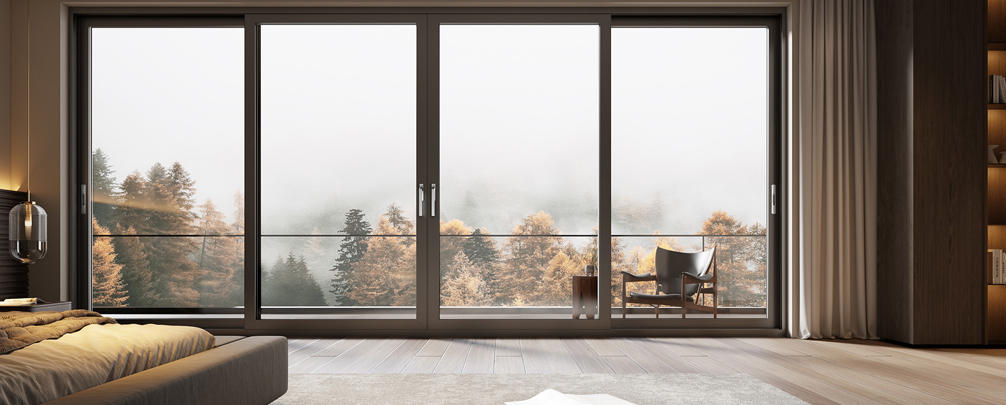
In the early morning, the first rays of sunlight streamed through Hanmus's panoramic floor-to-ceiling windows; free from the obstruction of traditional window frames, the entire room was bathed in light. On a weekend afternoon, I sat by the window, reading a book or watching a movie—the bustling city outside seemed entirely distant from me. When I closed the window in the evening, the world fell silent, leaving only the sound of my own breathing.
A great window doesn't just transform your living environment—it represents an entire way of life.
Some say that replacing windows is the "most worthwhile yet most easily overlooked" investment when it comes to home renovation. I used to doubt this, but now I believe it.
If your home is currently under renovation, or if you're struggling with noise, drafts, or water leakage, you might want to seriously consider replacing your windows.
I don't personally recommend any specific brands, but I can tell you about my choice – Hanmus Doors and Windows.
After all, what suits you best is always the best.